Is the “blank-slate” therapist really a myth?
Tabula rasa, the concept of the psyche as a ‘blank slate’ that is then formed over time through sensory input and experiences, has been around for centuries. Freud applied this concept to psychoanalysis with the theory that therapists are most effective as blank screens. The therapist is to share very little (if anything) about themself to the client so that the client is allowed space to project their unconscious thoughts and beliefs onto the therapist. Essentially, the therapist is to be a mirror to the client.
Has blank-slate therapy ever been possible? Psychology has positioned us as the deciders of what is “normal” and “abnormal” in human behavior and experience. With that comes the power to exclude and repress people who resist the status quo upholding oppressive systems, all under this guise of the “neutral” therapist. But, which therapists get to be neutral? And neutral to whom exactly? Based on my licensing exams, it was clear to me that the social worker was assumed to be white, cisgender, and straight while the people I am “treating” in these imagined scenarios are often queer, non-white, women, and/or in some way marginalized, pathologized, and surveilled.
Like most mental health professionals, I was taught blank-slate therapy as a crucial part to the work, but like many others, I had reservations. So, when I read The Gift of Therapy as a student therapist, I was astounded by how much Irvin Yalom brought himself into his therapeutic relationships with his own patients. Yalom essentially broke the blank-slate theory and instead posited that the most impactful work happens when the therapist centers the therapeutic relationship.
Yalom, along with anti-oppressive therapists such as Bonnie Burstow, who openly discusses therapist biases (in particular against women and racialized individuals), de-mystified the therapist’s Self in the room. I began to view self-disclosure in my own work as both political and relational tenets of healing from trauma created by systems of oppression and attachment wounds. As a Honduran-American therapist with tattoos and strong politics, this made sense to me in a way neutrality never really had.
In The Heart of Trauma, Bonnie Badenoch notes that releasing her predetermination of what “recovery” meant for her clients while also being an active participant instead of a detached observer lead to the most transformational and embodied change in her clients. Badenoch’s passage made me reconsider what neutrality meant. In a way, I hadn’t realized that I was still holding on to my own agenda of what I thought healing was supposed to be and using this as a measure for successful treatment. This is a mistake many of us therapists make—we reinforce systemic harm by assuming that recovery for everyone looks calm, regulated and grounded in the end. Yet, we live in a world that is extremely dysregulating and warrants rage, grief, and fear. Making these assumptions about recovery as markers of healing is actually just policing and repression repackaged.
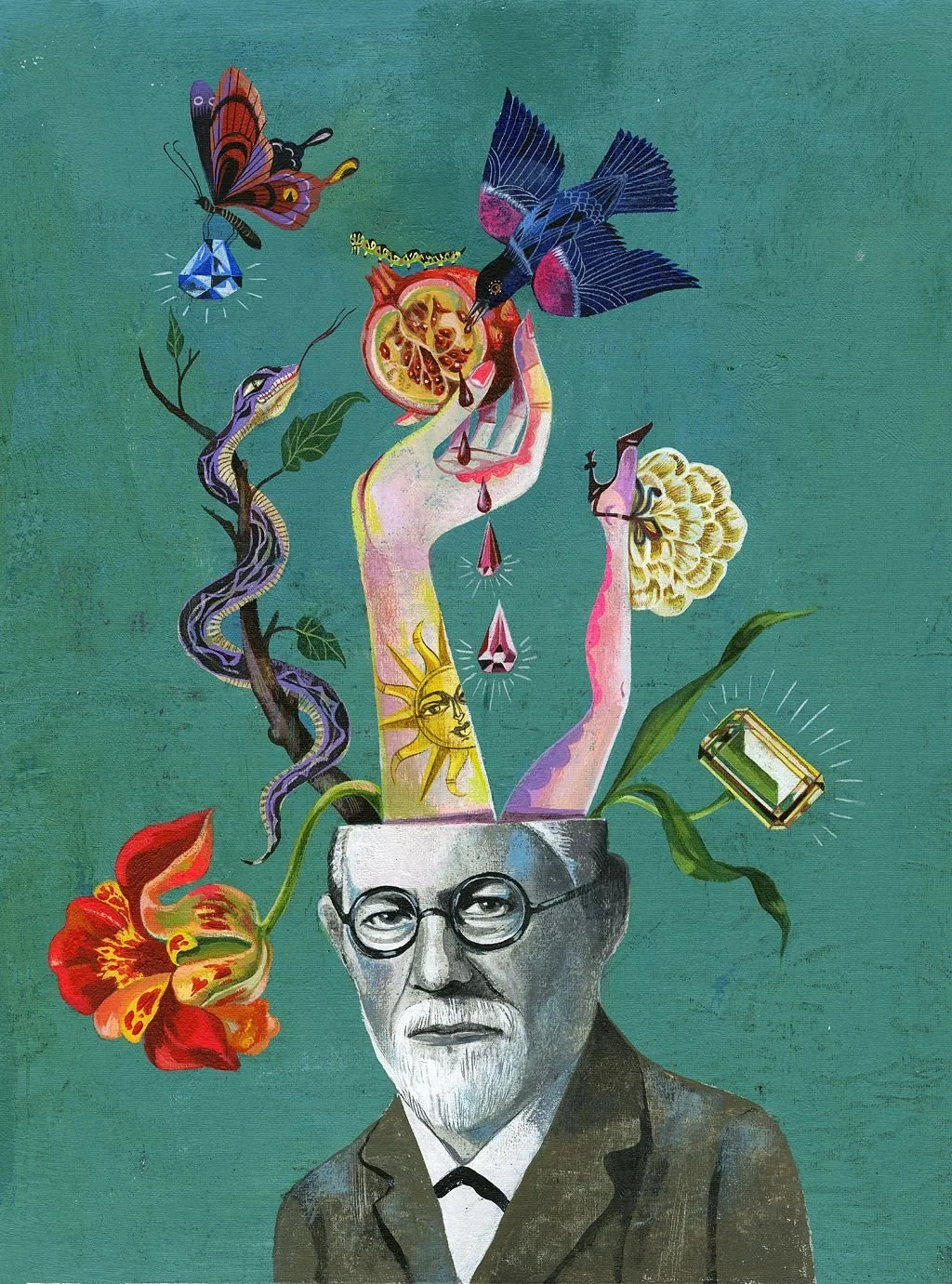
Which has made me come back to the question: is the blank-slate therapist really a myth? I think the answer is yes, and it always has been. The therapist is a person with history, lived experiences, beliefs, doubts, politics, and values. As Yalom puts it, the therapist is a fellow traveler on a journey along with the client. At the same time, putting aside my own beliefs about healing and starting each session as though I’m meeting my client for the first time with little expectation has beautifully expanded the work. Who am I to exert myself as an expert over anyone’s life and determine what healing means for them? There is something sort of blank-slated about this, but perhaps not in the ways you might think. I hate to admit it, but maybe Freud made some solid points after all (by the way, check out the artwork of Freud himself by Olaf Hajek—I love the contrast of Freud as a colorless, stoic person—a disengaged observer, you might say—while there is so much going on inside of his brain.)